


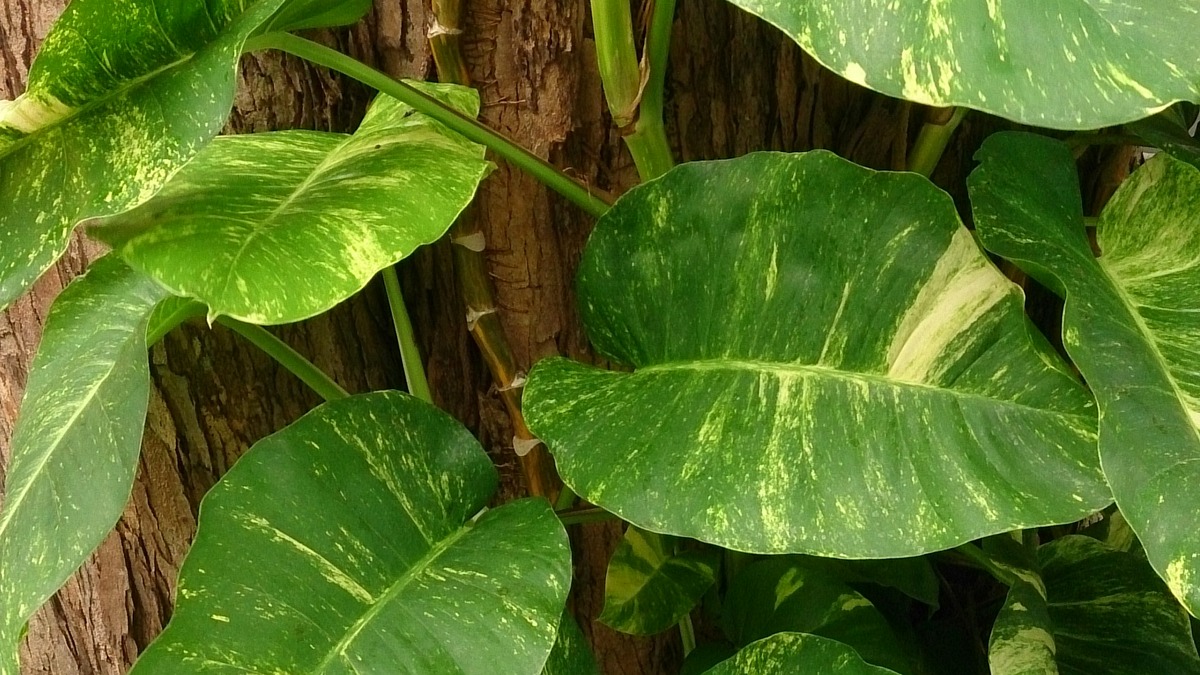
Few experiences in indoor gardening bring greater satisfaction than snipping a single green vine from an existing plant, placing it in a glass of clear water, and watching fresh white roots emerge before your eyes. Pothos (Epipremnum aureum), often affectionately called Devil’s Ivy, is celebrated worldwide for its lush trailing vines, heart-shaped variegated leaves, and near-indestructible nature. Learning how to propagate Pothos at home is the easiest, most rewarding way to multiply your houseplant collection for free or share gorgeous potted gifts with friends and family. In this step-by-step master guide, we will walk you through the entire propagation process from locating the root nodes to caring for your new potted vines.
Anatomy of a Pothos Vine: Finding the Node
Before making your very first cut, it is essential to understand the basic anatomy of a Pothos stem. Many beginners make the common mistake of cutting off a single leaf with just its slender petiole stem. While a lone leaf can sit in water for months without dying, it will never grow roots or produce a new plant without a vital botanical structure: the node.
A node is the small, slightly raised brown or knobby bump along the main vine where a leaf stem attaches to the vine. This specific intersection houses active undifferentiated meristematic cells capable of generating both root tissue and new foliage shoots. Often, you will even spot tiny, dry brown bumps already forming near the node; these are aerial root initials waiting for moisture to sprout. When learning how to propagate Pothos at home, always remember: no node means no new roots!
Supplies and Tools You Will Need
One of the best aspects of propagating Pothos is that it requires almost zero expensive equipment. Gather these simple household supplies before you begin:
- A Healthy Mother Plant: Select a vigorous Pothos vine with plump, vibrant green leaves and multiple nodes.
- Sharp Pruning Shears or Scissors: A clean, razor-sharp tool makes a crisp cut without crushing the delicate vascular bundles in the stem.
- Rubbing Alcohol: Wipe down your cutting blades before use to prevent introducing fungal or bacterial pathogens.
- A Clean Glass Jar or Vase: Transparent glass containers allow you to monitor root growth and water clarity without disturbing the cutting.
- Room-Temperature Water: Filtered tap water or collected rainwater provides the ideal rooting environment.
- Small Nursery Pot & Potting Mix (for Later): A 3 to 4-inch pot with drainage holes and a lightweight, well-draining potting soil when it is time to pot your rooted cuttings.
Step-by-Step Water Propagation Walkthrough
Water propagation is by far the most popular and foolproof method for multiplying Pothos vines. Follow these simple steps for guaranteed success:
Step 1: Select and Snip Your Cuttings
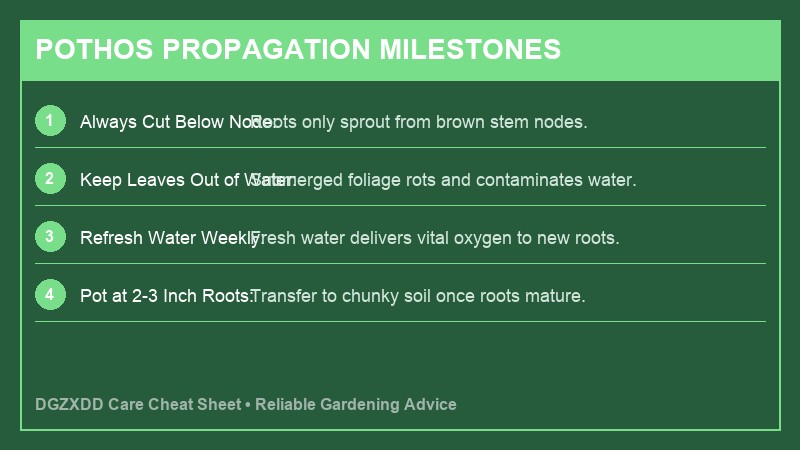
Examine your mother plant and identify a healthy vine with active growth. Measure about 4 to 6 inches from the tip, ensuring the section contains at least 3 to 4 leaves and 2 to 3 nodes. Using your sterilized shears, cut the vine at a 45-degree angle approximately a quarter-inch below the lowest node.
Step 2: Strip the Lowest Leaves
Gently trim off the bottom one or two leaves closest to your cut, exposing the bare nodes. Never submerge living leaves underwater; submerged foliage quickly rots, fouling the water and suffocating the emerging root cells.
Step 3: Submerge the Nodes in Clean Water
Place your prepared cuttings into your glass jar filled with fresh room-temperature water. Ensure the exposed bare nodes are completely submerged while the remaining upper leaves rest comfortably above the rim.
Step 4: Provide Gentle, Filtered Sunlight
Position your rooting jar in an area receiving bright, indirect sunlight. A north- or east-facing windowsill is ideal. Avoid harsh, direct afternoon sun, which can heat the water, scorch tender foliage, and encourage unsightly green algae growth inside the glass.
Step 5: Maintain Fresh Water Weekly
Over time, water naturally evaporates and loses dissolved oxygen. Empty and refresh the water in your jar once every 5 to 7 days. If the water ever looks cloudy or develops a slippery film, rinse the stems gently and refill with clean water immediately.
Alternative Method: Propagating Directly into Potting Soil
While water rooting lets you watch roots develop, propagating directly into potting soil eliminates the transitional shock when moving cuttings from liquid to dirt:
- Prepare the Pot: Fill a 4-inch container with a 50/50 mix of all-purpose potting soil and perlite, and moisten it thoroughly.
- Insert the Stems: Use a pencil to poke 2-inch deep holes in the mix. Insert your cuttings so that at least two nodes are buried beneath the soil line. Firm the soil gently around the stem bases.
- Maintain High Humidity: Cover the pot loosely with a clear plastic bag or humidity dome to trap ambient moisture. Place in bright indirect light and keep the soil consistently lightly moist (never waterlogged) for 3 to 4 weeks until roots anchor firmly.
Transplanting Rooted Cuttings into Soil
Once your water-rooted cuttings have developed sturdy white roots that measure roughly 2 to 3 inches in length (usually within 3 to 5 weeks), they are ready for their permanent home in potting soil.
- Plant in Clusters for Fullness: To create a lush, bushy houseplant right from the start, plant 4 to 6 rooted cuttings together in a single 4- or 5-inch pot. A single vine will simply grow into one long solitary string; grouping them creates a dense, multi-stemmed spectacle.
- Use Well-Aerated Soil: Mix 3 parts quality potting soil with 1 part perlite and 1 part orchid bark chips to ensure generous oxygenation around delicate new roots.
- The Crucial Transition Phase: Water roots are tender and accustomed to 100% moisture. During the first two weeks after planting in soil, keep the potting mix evenly moist (like a wrung-out sponge) to help the roots adapt to drawing moisture from soil particles. Gradually taper off to standard Pothos watering once you see fresh new leaf unfurls.
Common Propagation Hiccups and Solutions
Even though Pothos is the friendliest plant to multiply, you might occasionally face small hiccups. Here is how to handle them:
- Cuttings Turning Brown, Mushy, or Smelling Foul: This indicates fungal rot in the water. Remove the cutting, slice away the mushy stem end back to healthy green tissue using clean scissors, rinse the glass thoroughly, and restart with fresh water in a warmer spot.
- Leaves Yellowing While in Water: If the yellowing is on the lowest submerged leaf, simply pluck it off. If upper leaves are yellowing, the cutting may be receiving too much intense direct sunlight or chilling from nearby cold window drafts.
- No Roots Developing After 3 Weeks: Cold indoor temperatures often slow root formation. Move your propagation jar to a warmer location (around 72°F to 78°F / 22°C to 25°C) or place it atop a seedling heating mat to accelerate root production.
Top Pothos Varieties to Propagate Indoors
Once you gain confidence in how to propagate Pothos at home, you can easily apply this exact same node-cutting technique across the wide array of stunning Pothos cultivars:
- Golden Pothos: The classic variety characterized by heart-shaped green foliage splashed with creamy gold flecks. Highly energetic rooter and exceptionally forgiving.
- Marble Queen Pothos: A dramatic showstopper featuring heavy, marbelized white and cream variegation across pale green leaves. Needs slightly brighter indirect light for optimal root speed.
- Neon Pothos: Displays electric chartreuse and lime-green foliage that brightens dimly lit corners. Root cuttings take quickly in warm water.
- Satin Pothos (Scindapsus pictus): While technically a closely related cousin in the Araceae family, it propagates identically and features thick, velvety matte-green leaves dusted with shimmering silver flecks.
Once your cuttings develop sturdy roots, follow our tutorial on how to repot a houseplant without killing it and explore our favorite best small indoor plants for apartment living for creative shelf styling ideas.
Botanical Reference: Review scientific cultivation data for Epipremnum aureum from the University of Florida IFAS Extension.
Conclusion: Expand Your Indoor Jungle for Free
Knowing how to propagate Pothos at home is a transformative milestone for any indoor gardener. It teaches you to observe your plants with greater intimacy, demystifies plant biology, and provides an endless supply of lush green foliage to decorate your shelves, windowsills, and hanging planters. Grab your shears, take a few mindful cuttings from your favorite mother vine today, and watch the magic of new life take root before your eyes!
