


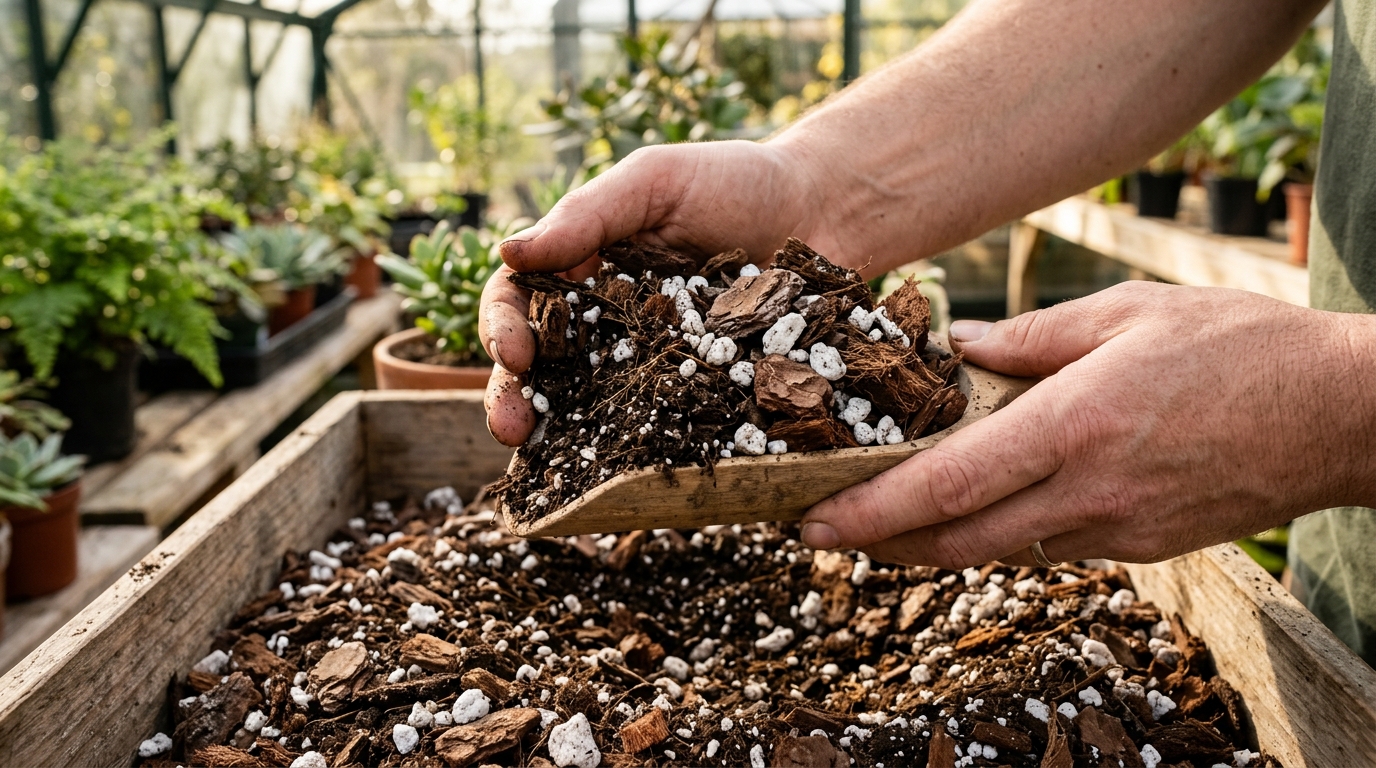
When you bring a beautiful new houseplant home from the garden center, it usually arrives in a dense, peat-heavy commercial substrate designed for automated greenhouse watering. In a typical home living room, however, that same dense soil takes weeks to dry out, suffocating roots and inviting fungal gnats. Creating the best soil mix for indoor plants is the single most impactful upgrade you can make for your collection. When your potting medium balances moisture retention with rapid oxygen circulation, root rot becomes virtually impossible and plants grow with twice the vigor.
Why Garden Soil Fails Completely in Indoor Containers
One of the earliest mistakes beginner gardeners make is scooping rich dirt from outdoor garden beds into indoor pots. Outside in the open ground, earthworms, beneficial microbes, and natural gravitational drainage keep soil porous. Inside a closed container, outdoor garden dirt compacts into an impenetrable, clay-like brick that blocks drainage holes and suffocates root cells.
Indoor plants need a “soilless” potting medium composed of lightweight organic materials, structural aerators, and natural drainage amendments that maintain macroscopic air passages even when wet.
The Four Core Pillars of a Master Soil Recipe
A professional-grade indoor potting mix is built on four functional components:
- 1. The Moisture Base (Coco Coir or Peat Moss): Forms the foundational body of the mix. Coco coir is sustainable, naturally disease-free, and holds several times its weight in moisture without becoming sludge.
- 2. The Chunk Aerator (Orchid Bark or Pine Bark): Rough, coarse wood bark chunks prevent the soil from packing together, creating large air gaps that houseplant roots crave.
- 3. The Fast-Drainage Mineral (Perlite or Pumice): Porous volcanic minerals that never break down. Perlite allows water to flow rapidly through the pot and out the bottom.
- 4. The Organic Nutrition (Worm Castings): Organic worm castings deliver gentle, non-burning microbial life and slow-release micronutrients that feed roots naturally.
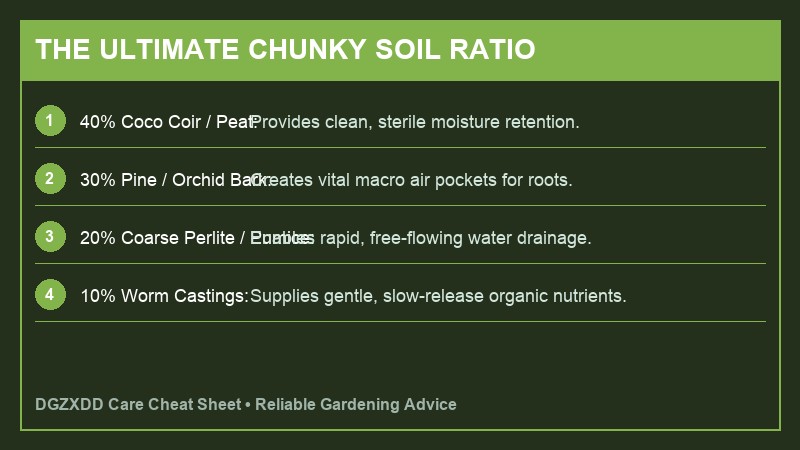
The Master Chunky Aroid Recipe (Universal Mix)
This master blend works wonders for Monsteras, Philodendrons, Pothos, Snake Plants, and almost all common tropical houseplants. Mix the following proportions in a clean 5-gallon bucket:
- 4 Parts High-Quality Coco Coir or Peat-Based Potting Soil
- 3 Parts Medium-Grade Orchid Bark (Fir or Pine Bark)
- 2 Parts Coarse Horticultural Perlite or Horticultural Pumice
- 1 Part Pure Earthworm Castings
- Optional Pro Addition: 1 handful of Horticultural Charcoal to filter impurities and prevent sour odors.
Soil Recipe Customization by Plant Family
| Plant Family | Recommended Ratio | Key Amendment | Target Moisture Behavior |
|---|---|---|---|
| Tropicals (Monstera, Pothos, Philodendron) | 40% Coir, 30% Bark, 20% Perlite, 10% Castings | Orchid Bark | Chunky, holds light moisture, drains in 5 seconds |
| Succulents & Cacti | 30% Soil, 40% Perlite/Pumice, 30% Coarse Sand | Pumice & Grit | Ultra-fast drying, zero water retention |
| Ferns & Calatheas | 50% Coco Coir, 25% Perlite, 15% Bark, 10% Castings | Peat / Coco Coir | Consistent, gentle moisture without sogginess |
| Snake & ZZ Plants | 40% Soil, 40% Perlite/Pumice, 20% Bark | Pumice | Rapid drying, bone-dry within 10 days |
Deep Dive into Essential Indoor Soil Ingredients
To craft the best soil mix for indoor plants, it helps to understand what each individual component contributes to root biome mechanics:
- Coco Coir & Peat Moss (Moisture Retention Base): Provides a spongy, fibrous organic base that holds moisture without dissolving into silt. Coco coir is a sustainable coconut processing byproduct with a neutral pH (5.8 to 6.8), making it superior to acidic sphagnum peat moss.
- Perlite (Aeration & Lightness): Naturally volcanic glass expanded by high industrial heat into featherlight white popcorn-like pellets. Perlite forms thousands of tiny pore spaces between soil particles, allowing water to drain swiftly while circulating vital oxygen directly to root cells.
- Pumice (Long-Lasting Gritty Aeration): An organic volcanic rock heavier than perlite. Unlike perlite, which can float to the surface over repeated top-waterings, pumice stays evenly distributed throughout the container, adding durable aeration and stability for top-heavy plants.
- Orchid Bark (Structural Chunky Pores): Fir or pine bark nuggets that simulate the decomposing forest floor where epiphytic tropicals naturally grow. Chunky bark creates large air pockets that prevent soil compaction over years of watering.
- Horticultural Charcoal (Sweetening & Filtering): Activated carbon chunks that absorb excess mineral impurities, prevent foul anaerobic odors, and resist mold and fungal buildup in the pot.
- Worm Castings (Gentle Organic Fertilizer): Pure organic vermicompost packed with beneficial microbial life and gentle, slow-release macronutrients that feed plants without risking chemical root burn.
Troubleshooting Common Potting Soil Problems
Even with high-quality potting mediums, indoor environmental factors can occasionally cause issues. Here is how to diagnose and resolve them:
- Hydrophobic Soil (Water Runs Right Off): When peat-based soils dry out completely, they contract into a rock-hard puck that repels water. Solution: Place the pot in a basin of lukewarm water for 30 to 45 minutes (bottom watering) to allow the peat to gently re-expand and rehydrate.
- White Fuzzy Mold on Soil Surface: Harmless saprophytic mold that feeds on decaying organic matter in perpetually damp, stagnant air. Solution: Scrape off the surface mold, increase room air circulation with a small fan, and allow the top 2 inches of soil to dry out between waterings.
- Soil Compaction Over Time: After 12 to 18 months, soil particles settle, squeezing out oxygen pockets. Solution: Gently aerate the soil by inserting a wooden chopstick 2 to 3 inches deep in several spots around the pot before watering.
Frequently Asked Questions
Can I sterilize DIY soil mix before using it?
Yes! If you are concerned about outdoor fungus gnat larvae or fungal spores in raw soil ingredients, bake the moistened potting mix on a baking sheet in an oven at 180°F (82°C) for 30 minutes, or microwave small batches for 90 seconds. Let it cool completely before potting.
How long does DIY indoor potting mix stay fresh in storage?
Stored in a sealed, dry plastic tote bin out of direct sunlight, homemade potting soil mixes remain fresh and viable for up to 12 months.
How to Test Your Soil Drainage in 10 Seconds
Once you mix your batch, perform the 10-second test: place a scoop of the soil into a small container with drainage holes and pour a glass of room-temperature water on top. In an ideal chunky mix, water should vanish beneath the surface instantly and begin pouring freely out of the drainage holes within 3 to 5 seconds. If water pools on top like a murky pond, add an extra scoop of perlite and orchid bark to open up air flow.
Step-by-Step Batch Mixing Instructions
Making a batch of custom soil at home takes less than 10 minutes when following this practical step-by-step workflow:
- Hydrate Your Base: If using compressed coco coir bricks, place the brick in a large bucket and add warm water. Wait 15 minutes as it expands into light, fluffy brown fiber. Fluff thoroughly with your hands to break up clumps.
- Measure Your Ingredients: Use a standard 1-quart nursery pot or measuring scoop as your unit of measurement. This ensures your ingredient ratios remain perfectly balanced regardless of batch size.
- Combine in a Large Mixing Bin: Add your coco coir, coarse perlite, chunky orchid bark, and worm castings into a clean plastic storage tote or garden wheelbarrow.
- Toss and Blend Evenly: Use your hands or a garden trowel to toss the mixture thoroughly from the bottom up. Ensure chunky bark and perlite are evenly distributed throughout the airy medium.
- Perform the Moisture Squeeze Test: Grab a handful of the finished blend and squeeze firmly. The mix should hold together momentarily before crumbling apart cleanly upon touch. If water drips out through your fingers, add another scoop of dry perlite; if it turns to dust, mist lightly with a spray bottle.
A well-aerated potting mix pairs perfectly with how to repot a houseplant without killing it and ensures you know how to water indoor plants correctly without suffocating delicate root hairs.
Soil Science Reference: Review professional media formulations from the University of Maryland Extension Potting Media Guide.
Conclusion: Healthy Roots Mean Glorious Foliage
Everything your houseplant exhibits above ground—from gleaming leaves to vigorous new unfurling shoots—is a direct reflection of root health below the soil line. By investing twenty minutes into crafting the best soil mix for indoor plants, you give your plants the exact chunky, breathable environment they enjoy in nature.
