


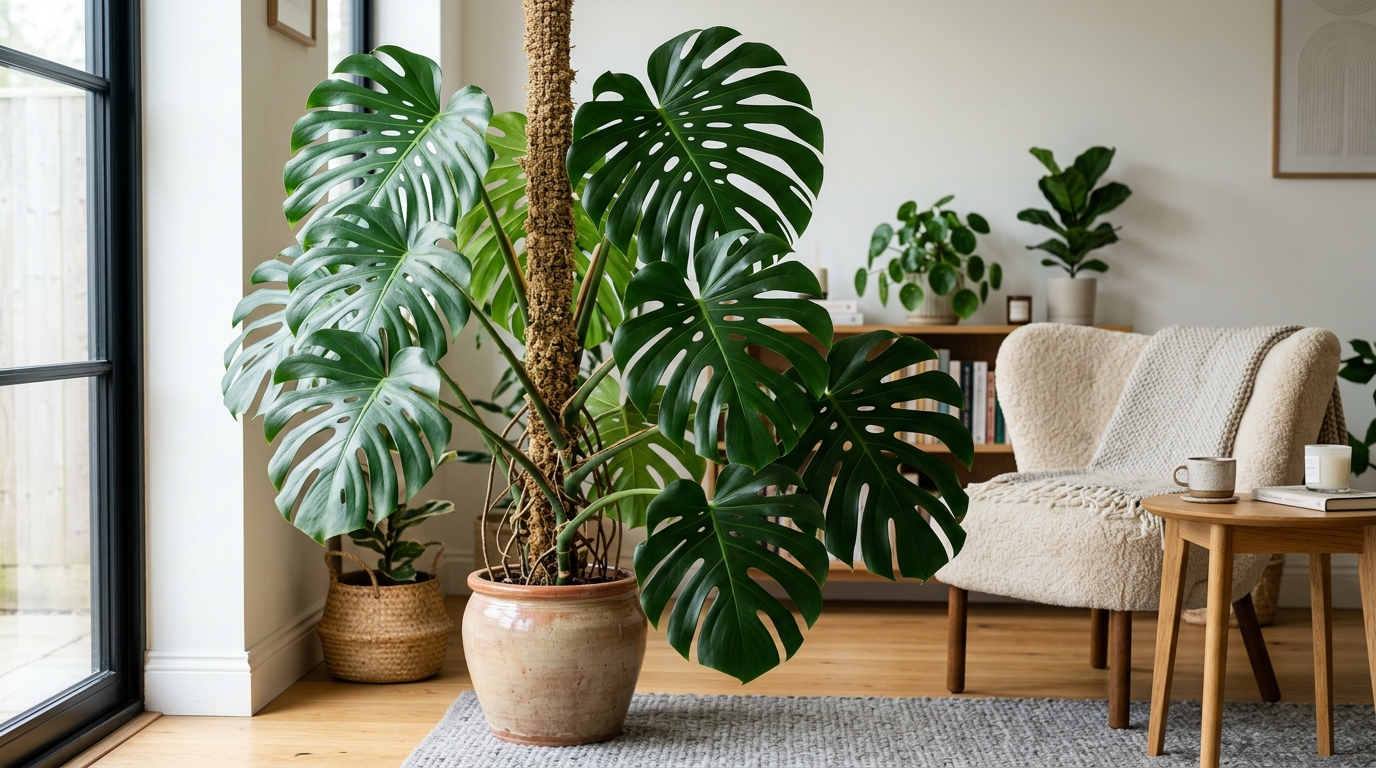
Known affectionately as the Swiss Cheese Plant, Monstera Deliciosa is the undisputed royalty of modern indoor houseplants. With its massive, dramatic split leaves and lush tropical presence, a mature Monstera instantly turns any ordinary living room into an architectural jungle. Despite its majestic scale, Monstera Deliciosa is surprisingly easygoing and resilient when you understand its native climbing instincts. In this ultimate care guide, we walk you through light needs, watering rhythms, moss pole training, and the secrets to getting huge leaves with dramatic fenestrations.
Understanding Fenestrations: Why Do Monstera Leaves Split?
The distinctive splits and holes in Monstera leaves are called fenestrations. In the dense rainforests of southern Mexico and Central America, Monsteras start on the forest floor and climb up massive host trees toward the sunlight. Botanists believe fenestrations evolved for two reasons: to allow precious tropical sunlight to filter through top leaves down to lower foliage, and to allow hurricane winds and heavy monsoons to pass through without tearing the leaves to shreds.
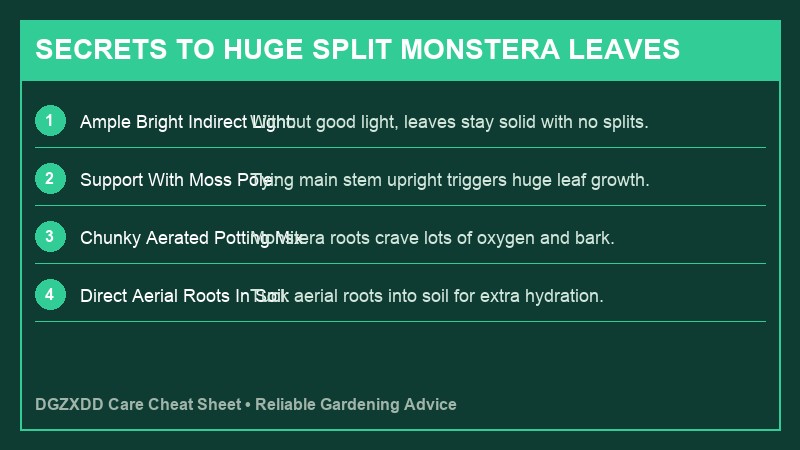
The key takeaway for indoor care: fenestrations require bright light and vertical support. If your Monstera produces solid, heart-shaped leaves without splits, it is signaling that it needs brighter indirect light and an upright climbing pole.
Lighting Requirements: Fueling Vigorous Leaf Size
While Monsteras are tolerant of average indoor light, they only produce show-stopping giant leaves when given generous amounts of bright, indirect daylight.
- Optimal Position: Place your plant 3 to 5 feet away from an east- or south-facing window with light sheer curtains.
- Morning Sun is Great: Monsteras enjoy 1 to 2 hours of gentle, direct morning sunlight. Avoid intense afternoon sun, which can scorch leaf edges.
- Low Light Warning: In dim rooms, Monsteras survive but will grow long, leggy stems with small solid leaves that fail to fenestrate.
Watering Routine and Chunky Soil Aeration
As epiphytic climbers, Monstera roots crave abundant oxygen. They despise sitting in dense, waterlogged soil. To prevent root rot, always pot your Monstera in a chunky mix rich in orchid bark and perlite, as detailed in our chunky indoor soil guide.
- When to Water: Allow the top 50% to 75% of the potting mix to dry out completely before watering. Insert a finger or moisture meter several inches deep to verify.
- How to Water: Saturate the soil thoroughly until water drains freely from the bottom holes. Empty the catch saucer after 15 minutes.
- Winter Adjustment: Reduce watering in colder months when sunlight decreases and the plant enters semi-dormancy.
How to Train Monstera on a Moss Pole or Trellis
In nature, Monsteras are hemiepiphytic vines that must climb to mature. Without a support structure, an indoor Monstera will sprawl horizontally across your living room floor. Installing a sturdy moss pole, coco coir pole, or wooden cedar plank transforms the plant’s growth habit:
- Find the Back of the Plant: Monstera stems have a distinct “front” (where leaf petioles extend outward) and “back” (where aerial roots emerge). Always place the support pole against the back of the main vine.
- Secure Gently with Plant Tape: Use soft velcro plant tape to secure the main thick vine to the pole. Never tie down individual leaf petioles, as they need freedom to rotate toward light.
- Tuck Aerial Roots Into Soil: As aerial roots grow, gently guide them down into the potting mix. This provides extra anchoring support and supplementary water intake.
What to Do With Wild Aerial Roots
As your Monstera matures, it produces long, rope-like brown cords that emerge from stem nodes and trail toward the floor or coil around furniture. In tropical rainforests, these aerial roots serve two functions: anchoring the climbing vine to tree trunks and absorbing moisture from humid air. When wondering how to care for Monstera Deliciosa at home with unruly aerial roots, you have three great options:
- Tuck Them Back into the Soil (Recommended): Guide trailing aerial roots back down into the potting mix. Once they penetrate the soil, they morph into standard terrestrial feeding roots, absorbing moisture and nutrients that fuel even larger foliage.
- Direct Them into a Moist Moss Pole: Pin emerging aerial roots against a damp sphagnum moss pole with garden ties. The roots will burrow inside the moss, providing sturdy structural support.
- Pruning Aerial Roots: If an aerial root is in the way or tripping passersby, you can safely trim it off flush with the main stem using clean pruning shears. Pruning aerial roots does not harm the plant’s health, though keeping them encourages faster leaf growth.
Fertilizing Schedule for Giant Foliage
Monsteras are vigorous growers with voracious appetites during the warm spring and summer months. To support the rapid expansion of massive fenestrated foliage, establish a balanced feeding routine:
- The Ideal Fertilizer Ratio: Choose a balanced liquid houseplant fertilizer with a 20-20-20 or 3-1-2 N-P-K ratio, rich in micronutrients like iron, magnesium, and calcium.
- Frequency and Dilution: Dilute the fertilizer to half of the manufacturer’s recommended strength and apply every 3 to 4 weeks during regular waterings from April through September.
- Winter Hiatus: Suspend fertilizer entirely from October through February. Feeding during dark winter months when growth naturally slows leads to unused salt buildup that burns delicate root tips.
Step-by-Step Monstera Propagation
Multiplying your Monstera Deliciosa or taming an overgrown specimen is simple when using stem cuttings:
- Locate a Node: Select a healthy stem section that includes at least one leaf, a prominent node, and ideally an aerial root nub.
- Make a Clean Cut: Using sterilized pruning shears, cut the stem roughly 1 to 2 inches below the node at a 45-degree angle.
- Root in Water: Submerge the node and aerial root in a vase of fresh room-temperature water while keeping the leaf blade out of the liquid. Position in bright indirect light.
- Change Water Weekly: Refresh the water every 5 to 7 days to maintain high oxygen levels. In 3 to 4 weeks, vigorous white secondary roots will branch off the aerial root.
- Pot into Chunky Soil: Once roots measure 3 inches long, plant the cutting into a 6-inch pot filled with chunky aroid potting mix and keep lightly moist for the first two weeks.
Frequently Asked Questions
Why are new Monstera leaves emerging without splits?
Young juvenile plants naturally produce solid heart-shaped leaves. If a mature plant starts producing solid leaves, it is not receiving enough bright indirect sunlight. Move it closer to a sunlit window to trigger fenestrations.
Are Monstera Deliciosa plants pet-safe?
Like all members of the Araceae family, Monsteras contain insoluble calcium oxalate crystals. Chewing the foliage can cause oral irritation and drooling in cats and dogs. Keep containers elevated on plant stands or train vines upward out of reach.
Troubleshooting Common Monstera Issues
| Symptom | Underlying Cause | Easy Solution |
|---|---|---|
| Yellowing Lower Leaves | Overwatering / Dense Soil | Allow soil to dry deeper; switch to chunky aroid mix. |
| Crispy Brown Leaf Margins | Dry Air / Inconsistent Watering | Increase room humidity; water thoroughly when top half dries. |
| Black Patches on Leaves | Severe Root Rot / Cold Shock | Check roots immediately; trim rotted roots and repot in fresh dry soil. |
| Small Leaves with No Splits | Inadequate Sunlight | Move closer to a bright window with filtered daylight. |
Monsteras require abundant root aeration; ensure success by potting in our best soil mix for indoor plants, following our guide on how to repot a houseplant without killing it, and exploring how to propagate Pothos at home for similar vining species.
Species Profile: Learn more about Swiss Cheese Plant botany from the Royal Horticultural Society (RHS) Monstera Deliciosa Profile.
Conclusion: Grow Your Own Tropical Masterpiece
Monstera Deliciosa is more than just a houseplant; it is a living work of art that rewards your care with dramatic, show-stopping foliage. Provide it with bright filtered light, chunky breathable soil, and a sturdy climbing pole, and watch it transform your home into an enchanting tropical oasis.
