


Living in a home with small north-facing windows, basement bedrooms, or windowless interior hallways does not mean you are destined to live without houseplants. While all photosynthetic living organisms require some degree of light to survive, several remarkable tropical understory species have evolved over millions of years to thrive in deep shade beneath dense jungle canopies. Finding the best indoor plants for low light dark rooms comes down to selecting plants whose cellular metabolism is built to handle scarce light without stretching, fading, or deteriorating.
In this comprehensive guide, we will evaluate the top shade-tolerant houseplants, explain how low illumination fundamentally alters watering requirements, and provide a clear, step-by-step care framework so your low-light greenery stays vibrant and healthy year-round.
What Qualifies as “Low Light” in an Indoor Space?
Before selecting plant varieties, it is helpful to establish what “low light” genuinely means in an indoor environment. Plant scientists measure light intensity in foot-candles or lux. Bright direct sunlight on a patio can register above 10,000 foot-candles, whereas a bright indoor windowsill provides between 500 and 1,000 foot-candles. A typical low-light indoor area—such as an office corner 15 feet from a window or a room illuminated solely by interior lamps—generally provides between 25 and 75 foot-candles.
A simple practical test is the “reading test”: if you can easily read a printed paperback book in the middle of the day without turning on an overhead electric lamp, there is sufficient ambient light for hardy shade-tolerant houseplants. If the space is pitch black with the door closed and lights off, no natural plant will survive without an artificial full-spectrum LED grow bulb.
Top 5 Indestructible Low-Light Houseplants
1. The Cast Iron Plant (Aspidistra Elatior)
Native to the shaded forest floors of Japan and Taiwan, the Cast Iron Plant earned its industrial nickname by surviving in Victorian parlors where dim gas lamps and poor ventilation killed virtually everything else. Featuring broad, arching forest-green leaves that reach up to three feet in height, this plant is virtually unbothered by deep shade, dry air, and irregular watering schedules.
2. The ZZ Plant (Zamioculcas Zamiifolia)
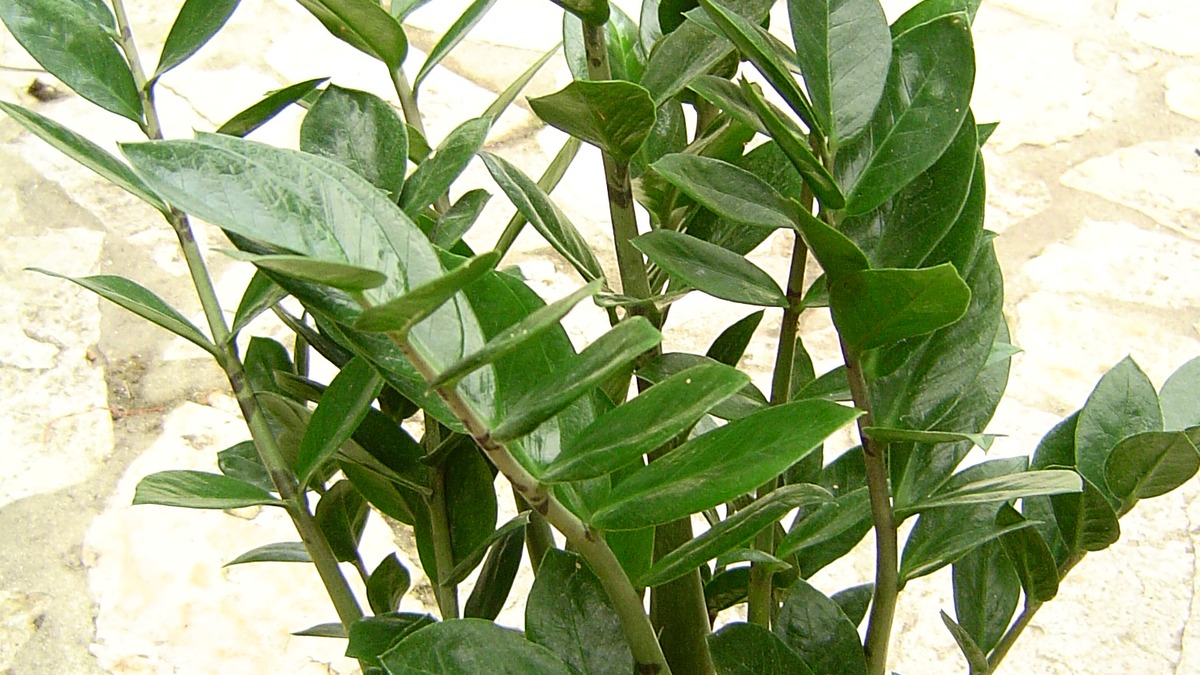
The ZZ Plant is widely considered the gold standard for dim apartments and corporate cubicles. Its waxy, compound leaves reflect available light like mirrors, giving the impression of polished marble. Beneath the potting mix, thick potato-like rhizomes store months’ worth of water reserves, making it impervious to both low light and forgetful watering habits.
3. The Snake Plant (Sansevieria Trifasciata)
While Snake Plants tolerate bright sunshine, they adapt seamlessly to dimly lit interior spaces. Their rigid vertical leaves provide crisp architectural structure to dark corners without spreading outward and taking up precious floor space. When grown in low light, Snake Plants dramatically slow down their metabolic pace, meaning they will ask for water only once every 4 to 6 weeks.
4. Chinese Evergreen (Aglaonema)
If you crave patterned foliage and color variations in a dimly lit room, Chinese Evergreens are your best choice. Cultivars with deep green and silver patterns handle low light effortlessly. The broader and darker the green patches on the foliage, the higher the concentration of chlorophyll, which enables the plant to produce energy from minimal light rays.
5. Parlor Palm (Chamaedorea Elegans)
For those seeking graceful, tropical palm fronds without needing conservatory-style greenhouses, the Parlor Palm is ideal. Staying compact at two to four feet indoors, it brings a breezy, relaxed natural texture to dim bedrooms and studies with zero fuss.
Low-Light Plant Comparison Matrix
| Plant Name | Minimum Light (Foot-Candles) | Winter Watering Frequency | Growth Habit | Toxicity |
|---|---|---|---|---|
| Cast Iron Plant | 25 – 50 FC | Every 3 to 4 Weeks | Upright Arching Foliage | Non-Toxic (Pet Safe) |
| ZZ Plant | 30 – 75 FC | Every 4 to 6 Weeks | Vertical Glossy Stems | Mildly Toxic if Ingested |
| Snake Plant | 35 – 75 FC | Every 4 to 5 Weeks | Architectural Sword Leaves | Mildly Toxic if Ingested |
| Aglaonema | 40 – 80 FC | Every 2 to 3 Weeks | Bushy Patterned Leaves | Mildly Toxic if Ingested |
| Parlor Palm | 50 – 100 FC | Every 10 to 14 Days | Delicate Feathered Fronds | Non-Toxic (Pet Safe) |
The #1 Mistake: Watering Low-Light Plants on a Regular Schedule
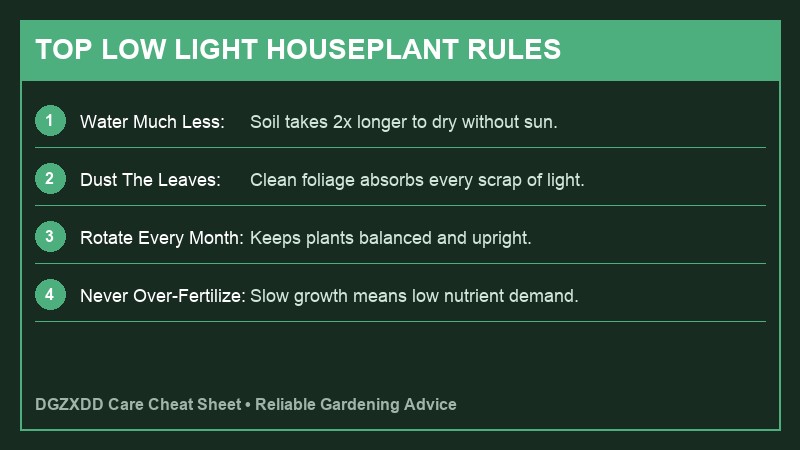
The most common reason people kill low-light plants is not actually the lack of light—it is overwatering. Sunlight drives photosynthesis, which in turn powers the transpiration process where roots drink water from the soil and release moisture through stomata in the leaves. When a plant sits in a low-light room, its transpiration rate plummets by up to 80%.
If you water a shaded plant on the same weekly routine as a plant sitting near a sunny window, the potting soil will remain soggy for weeks. As explained in our guide on how to water indoor plants correctly without overwatering, stagnant wet soil suffocates roots and inevitably breeds fungal pathogens that destroy the root system. Always verify that the potting mix is dry halfway down before adding any water.
Top Additional Low-Light Heroes: Cast Iron Plant and Aglaonema
Beyond ZZ Plants and Snake Plants, two other remarkable botanical champions excel as the best indoor plants for low light dark rooms:
- Cast Iron Plant (Aspidistra elatior): Historically favored in dimly lit Victorian parlors, the Cast Iron Plant earned its rugged name by surviving near-total neglect, fluctuating temperatures, and deep shade. Its broad, arching dark-green paddle leaves can grow up to 2 feet long, providing lush tropical ambiance to interior corridors where most other houseplants wither. It asks for little more than a monthly watering and occasional leaf dusting.
- Chinese Evergreen (Aglaonema): If you want patterned foliage in a dim room, Aglaonema is the gold standard. While highly variegated pink and red cultivars prefer medium light, deep-green and silver-patterned varieties (such as Silver Bay and Emerald Beauty) thrive effortlessly in low-light bedrooms and windowless offices. They tolerate dry indoor air and bounce back gracefully from minor under-watering.
Critical Low-Light Mistakes You Must Avoid
Growing plants in low-light environments requires special adjustments to your usual gardening habits. Avoid these critical traps:
- Overwatering in the Dark: When a plant receives minimal light, its photosynthetic engine runs in low gear. It consumes water at a fraction of the rate of a sun-drenched specimen. Always allow the potting mix to dry out significantly deeper into the container before adding more water.
- Forgetting About Artificial Lighting: Low light does not mean zero light. Every living houseplant requires photons to survive. If a room has zero windows, leave standard fluorescent or warm LED overhead lights on for 8 to 10 hours daily, or rotate the plant to a brighter room for one weekend every month.
- Over-Fertilizing Dormant Growth: Because low-light plants grow slowly, their nutrient intake is minimal. Feeding them full-strength fertilizers can lead to chemical salt burns on root tips. Dilute fertilizer to one-quarter strength and apply only once or twice throughout the entire spring and summer.
Frequently Asked Questions About Low-Light Houseplants
Can a plant survive in a room with zero natural light?
No natural plant can survive permanently in total darkness. However, if the room has ordinary fluorescent or LED ceiling lights turned on for 8 to 10 hours a day (such as in an office setting), low-light plants like the ZZ Plant and Snake Plant can survive and maintain their structure indefinitely.
Why are the leaves on my low-light plant stretching or becoming leggy?
When stems grow unusually long and thin with wide gaps between individual leaves, the plant is exhibiting etiolation—it is physically reaching toward the nearest light source. Move the plant 2 to 3 feet closer to an entryway or window, or rotate the pot a quarter-turn once a month to prevent uneven leaning.
When caring for plants in dark rooms, keep watering low to avoid yellow foliage; learn how to water indoor plants correctly and see why are my plant leaves turning yellow for fast diagnostics. For elegant shade blooms, read how to care for Peace Lily indoors.
Educational Reference: Learn more about shade plant physiology via the University of Missouri Extension Houseplants Guide.
Conclusion: Bring Life to Every Corner of Your Home
Do not let a lack of south-facing floor-to-ceiling windows deter you from creating your indoor sanctuary. By choosing the best indoor plants for low light dark rooms—such as the Cast Iron Plant, ZZ Plant, or Chinese Evergreen—and honoring their slower watering pace, you can enjoy lush, calming natural greenery in every cozy room of your home.
